
Marijuana DUI Laws in Arizona: Understanding Penalties and Legal Consequences in 2026
Arizona takes impaired driving very seriously and enforces some of the toughest penalties in the country. While Proposition 207 made it legal for adults to use and possess small amounts of marijuana for recreational purposes, it remains illegal to operate a vehicle while under the influence of cannabis.
If you drive after using marijuana, you put yourself and others at risk. Police officers can stop you if they suspect impairment, and a marijuana DUI conviction in Arizona carries severe consequences. Understanding Arizona DUI law as it relates to cannabis is important whether you use marijuana for medical or recreational purposes, as the state does not make exceptions for legal use when it comes to impaired driving.
How Proposition 207 Changed Marijuana DUI Laws in Arizona
In late 2020, Proposition 207 became law in Arizona. This law made it legal for adults 21 and older to use marijuana for fun, not just medical reasons. This works much like alcohol laws for people over 21.
Even though marijuana is now legal to use, you still cannot drive while impaired by it. Arizona law makes it illegal to operate a vehicle when marijuana affects your ability to drive safely. You can face DUI charges if marijuana is in your system and you are behind the wheel.
Before Proposition 207, the Arizona Medical Marijuana Act (AMMA) only allowed marijuana use for medical purposes. The new law expanded who can legally use marijuana, but it did not change the rules about driving. You must keep marijuana use separate from driving to avoid legal trouble.
How Police Test for Marijuana DUI

Roadside Questions
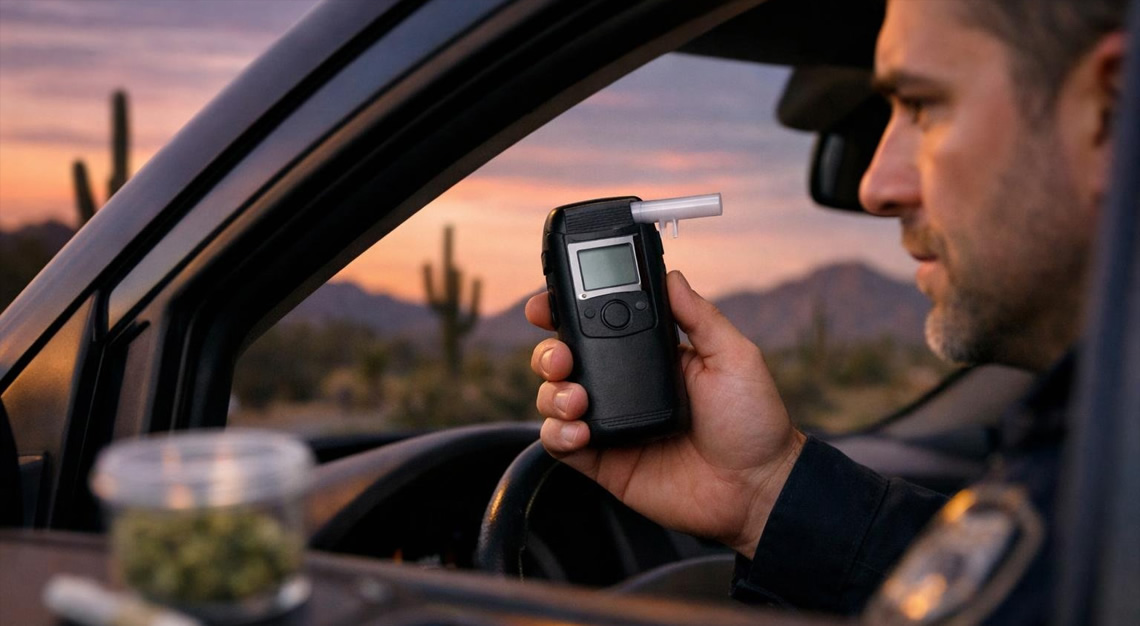
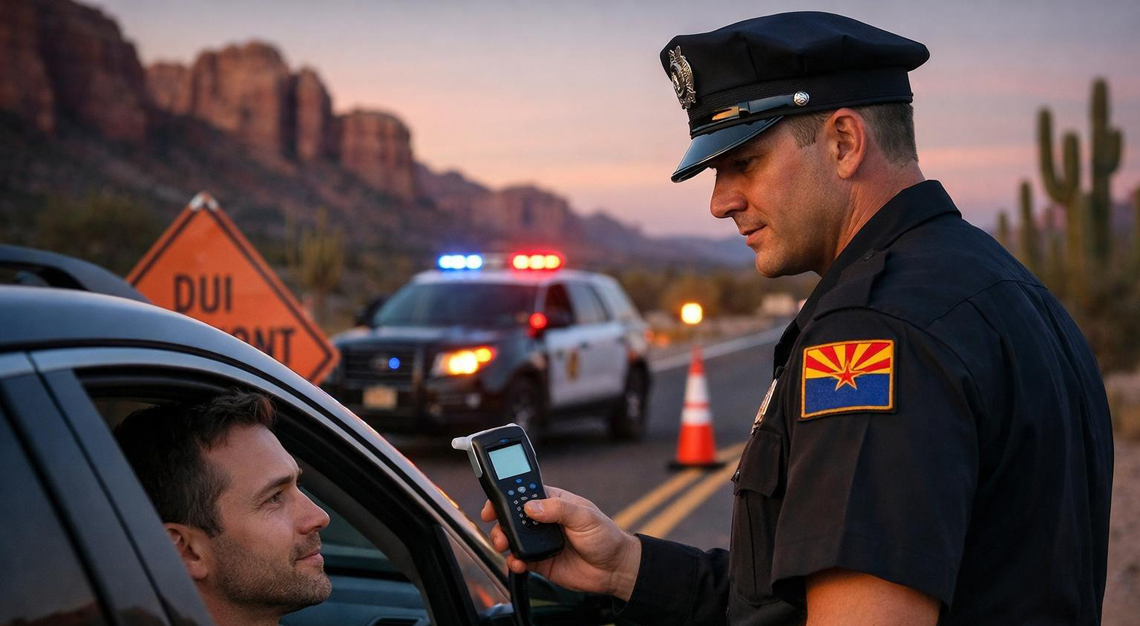
When an officer pulls you over, they will first ask for your license, registration, and insurance. They will also ask you basic questions while watching for signs of impairment. Officers look for slurred speech, the smell of marijuana, or any drug paraphernalia in your vehicle.
If the officer notices anything unusual, they will move forward with additional testing.

Field Sobriety Evaluation
Officers may ask you to perform field sobriety tests (FSTs) if they suspect marijuana impairment. These tests check your balance, coordination, and ability to follow instructions. Common tests include the horizontal gaze nystagmus test, which tracks eye movement, and tasks like walking in a straight line or standing on one leg.
Drug recognition experts may also evaluate you for specific signs of THC impairment. You have the right to refuse these tests.
Breath Analysis
A breathalyzer test measures alcohol content in your breath. This device works well for detecting alcohol but cannot detect THC or other drugs. Officers primarily use breathalyzers to rule out alcohol as the cause of impairment.
If marijuana use is suspected, officers need different testing methods.
Lab Tests
Blood and urine tests are the most accurate ways to detect marijuana use. These chemical tests can identify both active THC and THC metabolites in your system. Blood tests measure delta-9-tetrahydrocannabinol levels in nanograms per milliliter (ng/ml).
Officers must transport you to a facility where trained medical staff or certified phlebotomists can collect samples. The samples go to a lab for analysis. This process takes time but provides specific measurements of active metabolites in your blood.
Some states set legal limits at specific nanogram levels. Others have zero-tolerance policies for any detectable THC metabolites.
Marijuana DUI Penalties in Arizona

A first marijuana DUI offense is a misdemeanor. You face 1 to 10 days in jail at minimum. Your driver's license can be suspended for up to 90 days.
You must complete drug screening, education, counseling, or treatment programs. You also pay fines and fees. The court may order probation or community service.
Second Offense Marijuana DUI: Enhanced Misdemeanor Consequences
A second marijuana DUI remains a misdemeanor but carries harsher penalties. You must serve at least three months in jail, with 30 days served consecutively.
Your driver's license gets revoked for one year. You pay additional fines and fees. Mandatory drug education, screening, and counseling are required. The court will impose probation, community service, or both.
Third Violation Within Seven Years: Felony Aggravated DUI Charges
A third offense within seven years becomes an aggravated DUI felony. You face four months in prison for a third conviction. Subsequent offenses after the third result in eight months of prison time.
Your driver's license is revoked for three years. You may lose your vehicle entirely. You must pay fines and fees while completing mandatory drug education, counseling, or treatment. Parole, probation, and community service are also required.
Getting Help With Marijuana DUI Charges

Building a strong defense requires working with someone who understands the complex nature of THC testing and current laws. A Phoenix DUI lawyer with specific experience in marijuana cases can examine the details of your arrest and identify potential weaknesses in the prosecution's evidence.
Your legal team should be able to:
- Review the testing procedures used to measure THC levels
- Challenge the validity of field sobriety tests
- Question the legality of the traffic stop
- Negotiate with prosecutors to reduce charges
The right marijuana DUI defense attorney brings knowledge of recent legal developments and successful defense strategies. They work to protect your driving privileges and minimize penalties like jail time, fines, and license suspension.
Contact a criminal defense team that focuses on drug-related driving charges to schedule a case review and learn about your options.
A DUI attorney can help you by:
- Explaining your legal rights and options
- Building a strong defense for your case
- Navigating the court system on your behalf
- Working to reduce penalties or get charges dismissed
Having legal help makes a big difference. Your lawyer will answer your questions and guide you through each step of the process.
Contact the criminal defense team at (602) 900-9891 to schedule your complimentary consultation.


