
Can You Get a DUI While Parked in Arizona? Understanding the Law and Your Rights
Many people assume that a DUI charge only applies when someone is actively driving on the road. In Arizona, however, you can face DUI charges even when your car is completely parked and not moving. This surprises many drivers who believed they were making a safe choice by staying off the road.
Arizona DUI law extends beyond traditional driving to include what courts call "actual physical control" of a vehicle. This means you can be arrested and charged with DUI while sitting in a parking lot, your driveway, or even sleeping in your car. Understanding how this law works is important for anyone who drinks and might consider waiting in their vehicle until they sober up.
Key Takeaways
You can face DUI charges in a parking lot under Arizona law. These charges apply to both public and private property, which includes commercial parking areas and even your own driveway.
Arizona's DUI statutes focus on "actual physical control" of a vehicle. This means you could be arrested for DUI while sitting in the driver's seat with access to your keys, even when the car isn't moving.
Law enforcement may charge you with DUI in a parked vehicle if they believe you had the ability to operate it while intoxicated. The penalties remain the same regardless of whether your arrest happened on a highway or in a parking lot.
Several factors determine whether charges will stand up in court:
- Your position in the vehicle
- The location of your keys
- Whether the engine was running
- Your proximity to the ignition
These details carry significant weight in building or challenging a DUI case. Each circumstance receives individual evaluation based on the specific facts present at the time of your arrest.
Contact an experienced DUI attorney for guidance specific to your situation.
Arizona's DUI Law: Driving vs. "Actual Physical Control"
Arizona law does not require you to be actively driving to face a DUI charge. Under A.R.S. § 28-1381, you can be arrested if you are in actual physical control of a vehicle while impaired to the slightest degree or with a blood alcohol concentration of 0.08% or higher.
This means you could face charges even if your car is parked. The law applies when you have the ability to operate the vehicle, regardless of whether you are moving. Arizona courts interpret this standard broadly to prevent impaired individuals from potentially driving.
The statute covers more than just public roads. It applies to private property that the public can access, such as:
- Parking lots at stores or restaurants
- Apartment complex driveways
- Shopping center parking areas
- Residential driveways in some cases
You do not need to have the engine running or be sitting in the driver's seat for prosecutors to pursue charges under Arizona DUI laws.
What Does "Actual Physical Control" Mean in Arizona?
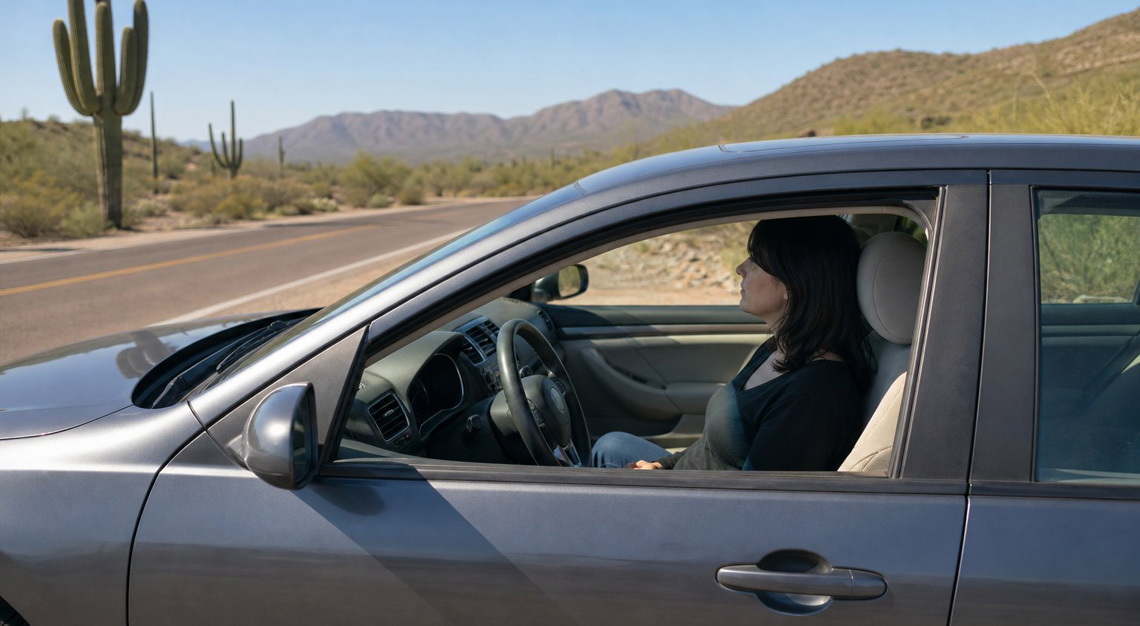
Actual physical control refers to your immediate ability to operate a vehicle, whether or not you are driving. You can face DUI charges in Arizona if you have this control while impaired, even when the car is parked.
Arizona courts use a totality of the circumstances test to decide if you had actual physical control. This approach looks at multiple factors together rather than relying on one detail.
Courts examine these key factors:
- Your position in the vehicle (driver's seat, passenger seat, or back seat)
- The vehicle's location (traffic lane, parking lot, or private driveway)
- Engine status (running or off)
- Headlight status (on or off)
- Key location (ignition, console, pocket, or outside the vehicle)
- Time of day and signs of recent driving
- Your state of awareness (awake or asleep)
The State v. Zaragoza case established this totality test in Arizona. No single factor determines the outcome. For example, sitting in the driver's seat with keys in the ignition creates a stronger case for control than sleeping in the back seat with keys on the dashboard.
This multi-factor analysis gives your defense attorney opportunities to argue you lacked actual physical control at the time officers arrived.
Typical Situations Where Parked Vehicles Lead to DUI Arrests
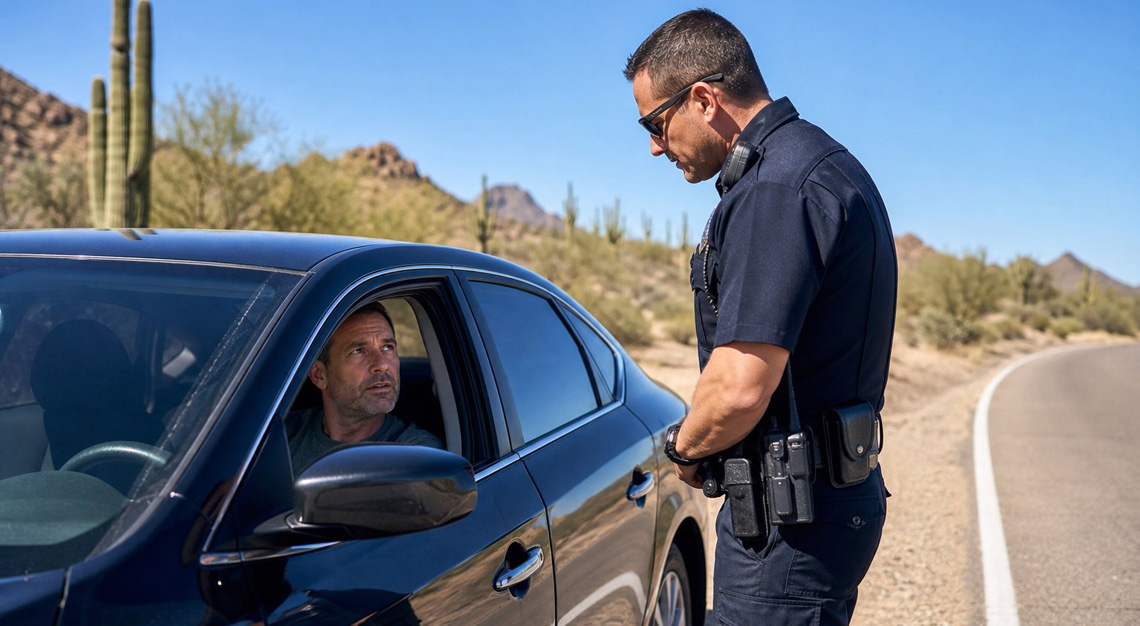
Resting While Intoxicated in Your Vehicle
You might think sleeping in your car keeps you safe from a DUI charge. Arizona law sees it differently. Officers look at specific details when they find you resting in a parked vehicle.
The location where you choose to sleep matters significantly. If police find you in the driver's seat with the engine running and air conditioning on, they will likely view this as actual physical control. You appear ready to drive at any moment.
Consider these key differences that affect your case:
Higher Risk Situations:
- Sitting in the driver's seat
- Keys in the ignition
- Engine running for heat or air conditioning
- Vehicle in a travel lane or roadway
Lower Risk Situations:
- Sleeping in the back seat
- Keys stored in the trunk or glove box
- Engine off
- Parked in a designated space
Courts examine whether you intended to drive. You can argue you were simply using your vehicle as shelter with no plan to operate it. This defense works better when you take clear steps to show you won't drive. Move to the back seat. Put your keys somewhere you can't easily reach them. Turn everything off.
Still, safer options exist. Call a friend or family member for a ride. Use a rideshare app. Stay at a nearby hotel. Ask to wait inside the bar or restaurant until you sober up. Each choice removes any possibility of a DUI arrest.
Where You Park Affects Your Legal Risk
You face DUI charges even in a legally parked car. Being in a proper parking spot helps your defense but doesn't guarantee protection. Officers can still arrest you if they believe you have control of the vehicle and could drive away while impaired.
Legal parking shows you made responsible choices. A marked space at an apartment complex looks very different from a car stopped on a highway shoulder. Courts may see proper parking as evidence you weren't recently driving and posed no danger to others.
Compare these parking situations:
|
Parking Type |
Risk Level |
Court Perception |
|---|---|---|
|
Marked space in lot |
Lower |
Planned stop |
|
Crooked across lanes |
Higher |
Impaired parking |
|
Highway shoulder |
Higher |
Recent driving |
|
Blocking traffic |
Highest |
Active hazard |
Dangerous stopping locations hurt your case. A vehicle partially blocking a lane suggests you just stopped driving while impaired. Hazard lights on a residential street raise questions about how you got there. Each detail becomes evidence prosecutors use against you.
Your defense attorney can gather proof about when and how you parked. Security cameras show your car sitting in one spot for hours. Receipts prove when you stopped driving. Witness statements confirm you walked to your vehicle and never moved it. These facts challenge the prosecution's theory that you recently drove drunk.
Building a DUI Case When Your Vehicle Is Stopped
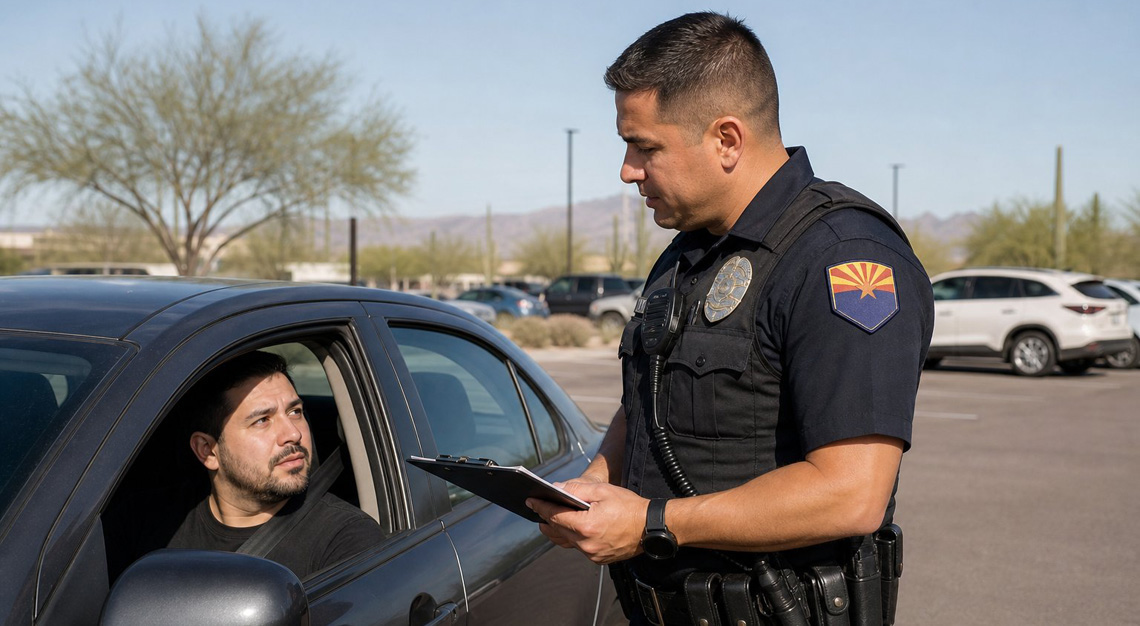
Police officers in Arizona follow specific procedures when investigating suspected impaired drivers in parking areas. These investigations often begin when property owners report concerns, officers conduct wellness checks on people sleeping in vehicles, or patrols monitor establishments that serve alcohol.
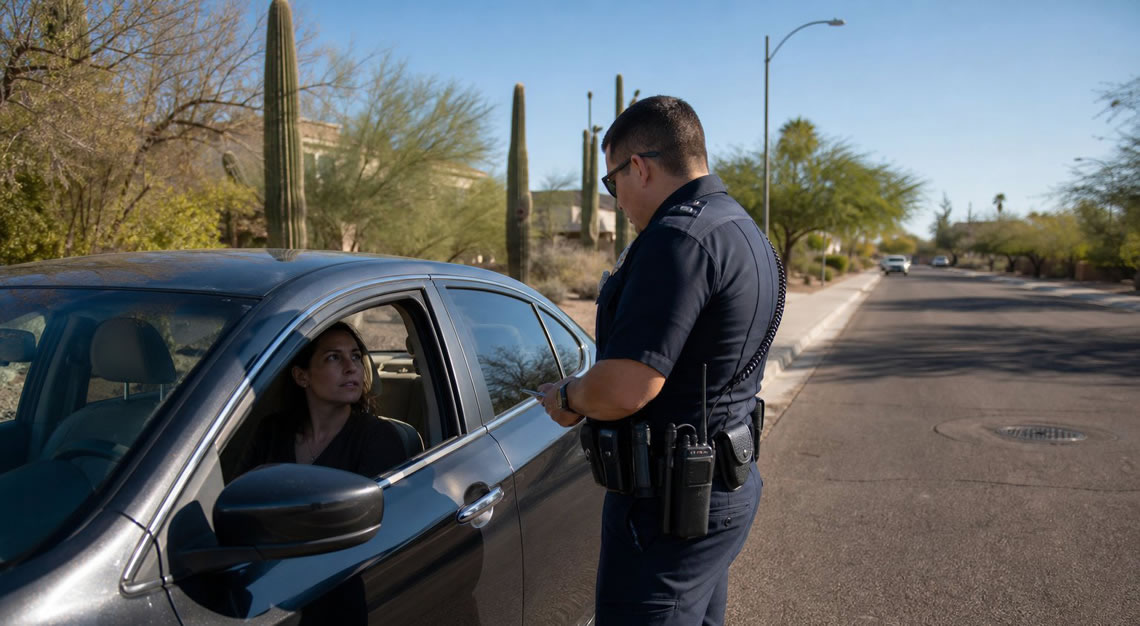
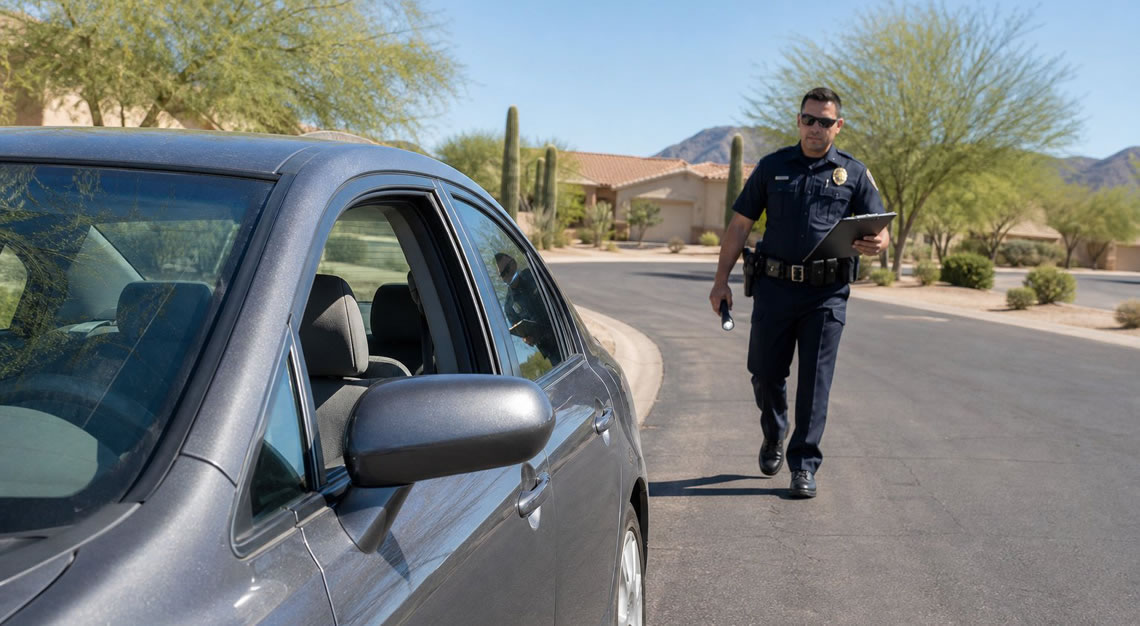
Officers typically approach your parked vehicle and make observations about your position, whether the engine is on, and what surrounds you. They look for indicators of impairment such as alcohol smell, unclear speech, red eyes, or open alcohol containers. You may be asked how you got there and if you drove recently. When officers suspect impairment, they will request that you complete field sobriety tests.
Several factors help law enforcement decide if you have actual physical control of your vehicle:
- How close you are to the steering wheel
- Whether the engine is running
- The vehicle's overall condition
- Where the keys are located
Officers can arrest you for DUI without witnessing your vehicle in motion if they believe you control it. Any statements you make about parking moments earlier or planning to drive home later can become evidence that you operated the vehicle while impaired.
Evidence Used to Prove or Dispute Physical Control
Prosecutors gather multiple forms of evidence to support parking lot DUI charges. This evidence includes recordings from body cameras and dashboard cameras, photographs showing how your vehicle was positioned, and officer reports documenting details like engine temperature, active lights, or gear position. Breath test results or blood analysis revealing blood alcohol content above 0.08% or drug presence also play a key role. Statements from witnesses or parking security personnel may be included.
Prosecutors can point to circumstantial evidence such as keys in the ignition or a warm engine to demonstrate you operated the vehicle while intoxicated. Defense lawyers examine this evidence carefully for missing information or contradictions. Some cases show the person became intoxicated only after parking, which changes how courts evaluate actual physical control. Quick preservation and review of all evidence matters greatly after any DUI arrest.
Consequences for a Parked-Car DUI in Arizona
Arizona does not reduce penalties just because your vehicle was parked instead of moving. You face the same serious consequences whether officers found you in a parking lot or on a highway.
First Offense Penalties
Your first conviction brings mandatory jail time of at least 72 hours. The court will impose fines totaling $1,500. Your driving privileges will be revoked for 90 days. You may also need to install an ignition interlock device in your vehicle before you can drive again.
Repeat Offense Penalties
A second conviction within ten years results in 20 days of jail time and $3,000 in fines. A third conviction brings up to 120 days in jail and $10,000 in fines.
Enhanced Charges
If your blood alcohol concentration measures 0.15% or higher, you will face extreme or super extreme DUI charges. These charges carry harsher penalties than standard DUI offenses.
Additional Consequences
Beyond your criminal sentence, you will likely experience increased insurance costs. Your employment may be affected. Your driving privileges will be restricted even after you complete your sentence.
Defense Strategies in Arizona Parked-Car DUI Cases

When you face a parked-car DUI charge, your defense centers on two critical areas. A DUI defense attorney will examine the evidence and build arguments to protect your rights.
Questioning Physical Control Claims
Your attorney will focus on whether you truly had the ability to operate the vehicle while impaired. The prosecution must prove you were in actual physical control, not just present in a parked car.
Key defense arguments include:
- Key location - Were your keys in the trunk, glove box, or outside the vehicle?
- Seating position - Were you in the back seat or driver's seat?
- Vehicle condition - Did the car have mechanical problems that prevented operation?
- Intent evidence - Did your actions show you planned to stay parked?
Your DUI defense attorney may present evidence that you took steps to avoid driving. Sleeping in the back seat with keys stored away demonstrates you disabled your ability to operate the vehicle. A car with a dead battery or empty gas tank supports the argument that you could not drive.
The goal is to create reasonable doubt. If the prosecutor cannot prove you were positioned to immediately operate the vehicle, the charges may be reduced or dismissed.
Your attorney might also challenge the officer's legal basis for approaching your parked vehicle. Without probable cause for the initial contact, evidence gathered afterward may be suppressible through pretrial motions.
Attacking Test Results and Sobriety Assessments
Chemical test evidence often forms the backbone of DUI prosecution. Your attorney will scrutinize every aspect of testing procedures.
Common challenges include:
|
Test Issue |
Defense Approach |
|---|---|
|
Breath machine errors |
Question calibration records and maintenance logs |
|
Blood draw problems |
Examine who performed the draw and their qualifications |
|
Chain of custody gaps |
Identify breaks in sample handling documentation |
|
Rising blood alcohol |
Argue impairment occurred after you parked |
Field sobriety tests performed in parking lots face additional scrutiny. Uneven pavement, poor lighting, inappropriate footwear, and fatigue all affect your performance. Medical conditions like inner ear problems or injuries can explain balance issues unrelated to impairment.
Your DUI defense attorney may bring in expert witnesses to explain test flaws. Successfully excluding or limiting this evidence weakens the prosecution's case, especially when physical control is already questionable.
Steps to Take After a Parking Lot DUI Arrest in Arizona
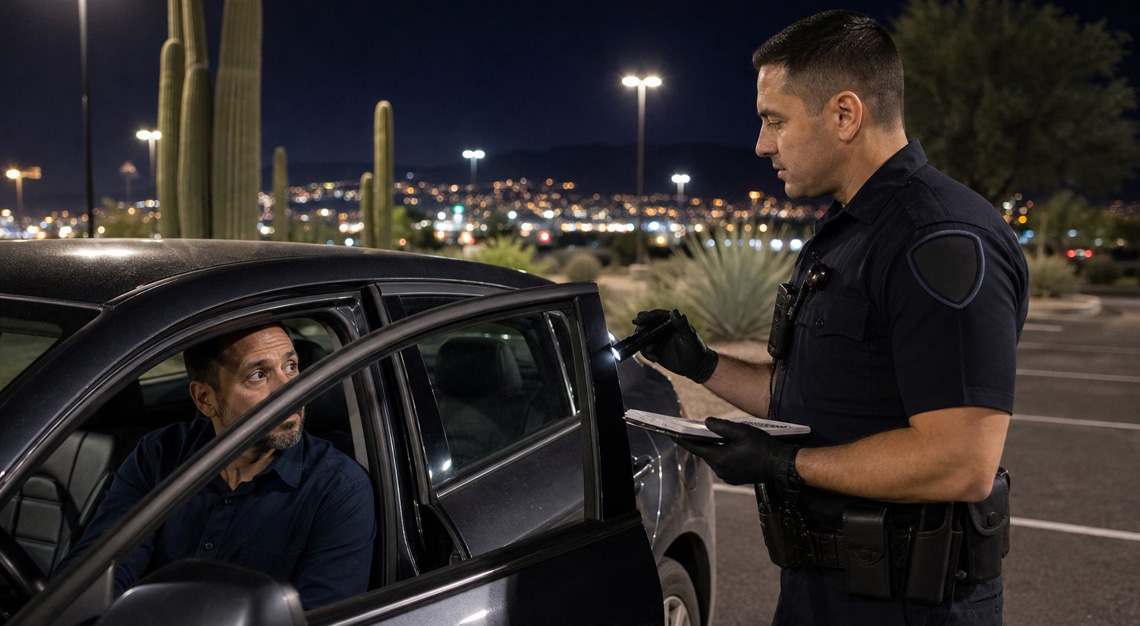
If you face arrest while parked, your actions matter. Stay calm and treat officers with respect. Do not argue or become confrontational during the arrest process.
Your immediate rights include:
- Exercising your right to remain silent
- Avoiding detailed statements about your drinking or parking decisions
- Declining to answer questions without legal counsel present
You must comply with lawful police requests. Keep in mind that refusing chemical testing triggers separate penalties under state implied consent rules.
After your release, document everything you can recall. Write down where your vehicle was parked, which seat you occupied, and the location of your keys. Note any witnesses who saw you in the parking lot.
Critical next steps:
- Contact a DUI defense attorney without delay
- Request preservation of parking lot surveillance footage
- Review all arrest details with your lawyer
Early legal help allows your attorney to examine evidence and build your defense strategy. A parking lot arrest does not guarantee a conviction.
Common Questions About DUI Arrests in Stationary Vehicles in Arizona
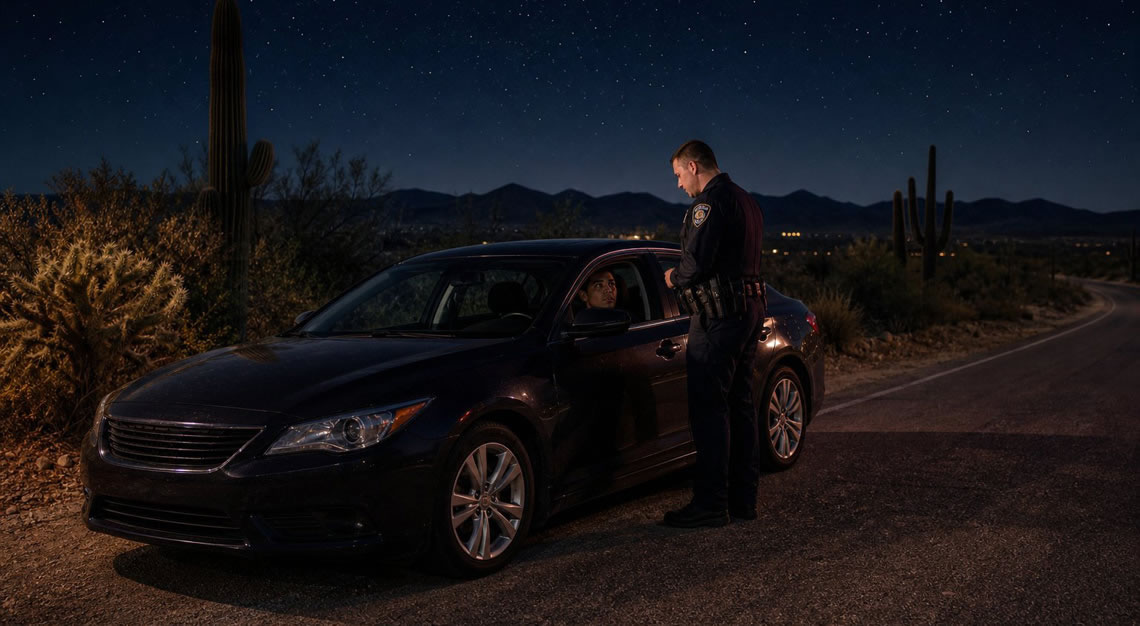
Will you face a DUI if your vehicle is turned off while you sit behind the wheel?
You can be arrested for DUI in Arizona even when your car is not running. The law focuses on whether you have actual physical control of the vehicle while impaired.
Police look at where your keys are located, how you positioned the car, and what you were doing at the time. If officers find keys in your pocket or the ignition, they may decide you could operate the vehicle.
Factors law enforcement considers:
- Key location (ignition, hand, pocket, or floor)
- Which seat you occupy
- Engine temperature
- Your behavior when found
- Time of day and weather conditions
The prosecution must prove you had control over the vehicle while intoxicated. Each case depends on its specific facts and circumstances.
Does the location of your parked vehicle change DUI enforcement?
Arizona DUI statutes apply in many places beyond public streets. You can face charges in a grocery store parking lot, apartment complex, or your own driveway.
Private property does not automatically protect you from DUI prosecution. Officers can investigate and make arrests in parking structures, business lots, and residential areas.
The specific property type and access rules may affect your case. Some defenses relate to whether the location meets legal definitions under Arizona law. You should discuss these details with a defense attorney.
Can moving to the rear seat prevent DUI charges?
Sitting in the back seat reduces the appearance of control, especially if you place keys out of reach. Courts view this positioning as evidence you did not intend to drive.
However, law enforcement may still make an arrest. The final decision rests with prosecutors and judges who review all circumstances.
This strategy lowers your risk but offers no guarantee. You face better odds when you combine back-seat positioning with keys stored in the trunk or given to someone else.
What if you consumed alcohol only after parking?
The timing of your drinking matters significantly. If you parked while sober and drank afterward, this sequence can form a valid defense.
You must prove you were not impaired during the period you had physical control. Evidence might include:
- Witness statements
- Receipt timestamps
- Video footage
- Your own testimony
Prosecutors need to establish that impairment occurred while you controlled the vehicle. These timing arguments require detailed legal analysis and evidence gathering.
Should you hire an attorney for a first parked-car DUI charge?
Arizona imposes serious penalties even for first DUI convictions. You may face jail time, fines, license suspension, and insurance increases regardless of whether you drove.
An attorney examines whether prosecutors can prove actual physical control. Your lawyer can challenge evidence, negotiate reduced charges, or pursue dismissal.
Professional legal representation gives you the strongest chance to protect your rights and minimize consequences. Schedule a consultation to review your specific situation and available options.
Contact the Phoenix DUI Lawyer DUI and Criminal Defense Lawyers

DUI cases involving parked cars in Arizona require careful examination of the facts and legal details. The team at Phoenix DUI Lawyer Attorneys at Law handles these types of cases regularly. They work on cases that happen in bar parking lots, apartment buildings, and private driveways throughout Arizona.
The firm can help you by:
- Looking at the details of your arrest
- Checking police reports and video footage
- Determining if challenging the charges makes sense for your case
If you have DUI charges or a court date coming up, you need to act quickly. The defense team can review your situation and create a defense strategy that fits your specific needs.
Call (602) 900-9891 to set up a free consultation. During this meeting, you can discuss your case and learn about your options.


